Showing posts with label teaching. Show all posts

Sunday, 3 March 2013

Free clickers

Socrative

Socrative is a Student Response system, like Who Wants to Be a Millionaire.  The advantage of Socrative over other solutions is that it is free, and uses no special hardware.

To set it up you...

Go to www.socrative.com and create an account.  You get a room number allocated, but can change it (I’ve got room 9 0000 000).  That is all the set up you need.

To use in a lesson, you simply go to t.socrative.com.  You can do this on your laptop, but it is also designed  to be used on a phone / tablet.

Once there (and logged in) the laptop / phone screen looks like this. The easiest things to do are the Multiple Choice, True/False or Short Answer options.  You do not type the questions in, you simply ask the students orally, or have the question on the board, as we always do.

The difference comes with how students respond.

They go to m.socrative.com, on their phones / ipod touches / any other internet enabled device.  They can do this having connected to the school “JBSGuestwifi”.

When you ask a question, they simply get an A to E option on their screens.  As you can see there is no question or context, all they do is click A, B, C, D or E. 

Once they vote, a bar chart appears on your device.

I’m sure I’ve made it sound more complicated than it really is.  I discovered this site on Thursday (I was looking for something completely different), and had it running with students by my first lesson on Friday.


As you can see you can also have an “Exit Ticket”.  This is like the “Post-it note on the way out”, except I get an email with a summary.  I used this with Y13, and it illuminated a problem I hadn’t already spotted, so my starter for next lesson is sorted.  There are 4 parts to the exit ticket; name, how well did you get it (4 point scale), what did you learn, and answer the question on the board.

I’ve yet to play with the Quizzes you can write, but will share more later.

Downsides—not all students have phones.  They can pair up, or work in groups.  The exit ticket allows students to pass the device to their neighbour for them to submit.

Some students just opted to use their 3G rather than the school guest wifi.


Just to pre-empt the conversation we have a very clear policy on phones in class / school.  They are absolutely banned / not allowed, unless I decide to let my students use them for a valid educational reason, and thne it is on my terms.  I know it is not the same everywhere, and would suggest to anyone who works under a complete ban that they take the case for teacher choice to school leadership.

Sunday, 1 January 2012

Most important topic in maths?

What is the most important topic in maths.  Many, including parents, and (more worryingly government) would have you believe it is 'basic numeracy', which tends to mean 'times tables'.  I agree that a basic awareness of magnitude and the ability to add siubtract or do multiplaications in your head is important, I really don't think that it is the most important thing that maths teachers should be doing with classes.

This is not my idea, by the way, I heard it discussed (briefly) on Radio 4's rather excellent "The Infinite Monkey Cage", about a year ago, but the more I think about it, the more I'm convinced its right.

What we should do more of is probability.  Not just the stuff we do already - words, probability lines, fractions / decimals (do any maths teachers use percentages for probability, and if not, should we if the real world do?).  Not just Venn diagrams and tree diagrams, but actual probability and risk assessment.

Don't panic.  This is not risk assessment from a H and S form point of view, but from a maths point of view!


Why?


Well, every decision we make is based on probabilities and expectations.  Should I buy a lottery ticket? What car finance deal should I go for?  What stocks and shares should I buy?

Everyone needs to be able to properly weigh up the pros and cons of any situation.  We need to teach the appropriate skills to do that. Students need to be able to set up appropriate models (modelling may be the second most important thing we teach!), and interogate those models.  We then need to use our understanding of probabilities (using prior information) to make the 'best' decision.

There's a great example of this earlier on my blog - have a look at http://chrismaths.blogspot.com/2010/05/real-functional-maths.html to see why it's important.

Any other thoughts??


Thursday, 6 October 2011

Made up Maths Words

I'm a big fan of creative literacy, generally with a maths focus.  What I'm worried about is whether it may do more harm than good.

Some examples; from recent lessons, to things from a while ago...

Shape names:  I asked a class if they knew the name of a 12 sided polygon. After a sea of blank faces presented itself, I prompted "it begins with D".  Dozenagon was the answer offered.  So, for the rest of the lesson we used Dozenagon alongside the proper name.


Same lesson, outterior angles.  Opposite of interior, in case you were wondering!

I've also used squillimeters and squentimetres for sq mm and sq cm.  This helps avoid the centimetres squared problem. Many students don't appreciate the difference until I tell the (both true) stories of the tech teacher who ordered 10 metres squared of turf for his 10 sq metre garden, and the one (from the telly I'm told) who ordered 5 metres cubed of concrete to be poured on to the floor that required 5 cubic metres.  They certainly know the difference.

I've also verbised words.  Y12/13 in particular use the verbs To Pythagorise and To Trigonometrise to describe what to do to a forces or vector triangle.  Bracketising is something I use as a synonym for factorising.

The question is does it matter?  I am always careful to use the real word too, but I feel it is part of building up a good relationship for learning with pupils, and a few years ago some of a class startd keeping a list of made up words in the back of their books. I tried to get them to create a wiki for it, but the VLE didn't make it easy enough, which is a shame as it would be great to have a full record of words over the year.

All thoughts always gratefully received!

Wednesday, 6 April 2011

Portable Visualiser


Some of you will know I got all excited last night when I discovered a new trick with my phone.

I found an app in the Android Market place that lets me use my phone as a wireless webcam. Its called ipwebcam, and can be found on the right.
Its dead easy to set up. Install, choose image size, refresh rate etc, and click run. You need both your phone and PC connected to the same wireless network.

It really is that easy. You then point your browser to the address at the bottom of the screen, and choose how you want to view - I used the "browser built in viewer" with Firefox.

Here are the results...
As you can see, not bad results.

I had issues at school. It didn't work (I was gutted). Turns out the proxy servers can't cope. Fortunately a friendly ICT teacher found a solution. Turn off the proxy. Now (at school) I have Chrome for the internet (all proxied up), and Firefox with proxy turned off for the webcam.
Edit:  It seems to just work now, updated school network possibly. May 2013


My Dept eLearning rep is @Maridavies82, and while she is a brilliant teacher, she is team apple! There is an iPhone app that does much the same thing - called Mini Web Cam, I believe. All the setting up and proxy issues are the same.

Sadly as a portable visualiser it doesn't really work - the resolution on the camera, and the lighting is not really up to the job. That could be a function of my phone (ZTE Blade btw) as much as anything else.

I have however, enjoyed playing with the gadgetry, and reckon there is scope for using this in other ways. It'll support sound, and as it will work anywhere in the school's wireless bubble it could be a lot of fun...

I'd love to hear if anyone uses phones in this way.

Edit: May 2013:  I now have a better phone with a flash (Samsung Galaxy Ace 2), as well as a tablet (Asus 300) and a Samsung Galaxy camera.  This all works much better now thankyou!  


Friday, 4 March 2011

DreamTeachers, not a Dream School

Jamie Oliver's Dream School caused quite a stir last week. I didn't watch it, but I didn't feel the need to - there were enough tweets about it to get a general feel. Many comments were along the line of "Why don;t they get good teachers, not celebs".

Then I got this email...


Hello Chris Smy,

Did you see Jamie's Dream School on Channel 4? Did it leave you seething or surprised by the celebrity experts’ approach to teaching? To allow teachers to have their say Jamie Oliver and You Tube have launched a parallel campaign, Britain’s Dream Teachers. Their aim is to promote real teachers who are doing it right in the classroom rather than celebrity experts doing it for the TV.

Britain's Dream Teachers is looking for teachers to video and upload their best approaches to teaching tough GCSE and Standard Grade topics. There will be seven 'Dream Teachers' judged by a panel of past National Teaching Awards winners and the seven teachers will win £3k for themselves and £7k for their school.


The Maths topics teachers are being asked to tackle are:

· How do I rearrange complex algebraic formulae?

· What is Pythagoras’ theorem and where does it apply?

· What are vectors and how do I work them out?

Have a look at http://www.youtube.com/dreamteachers and for tips on creating a short film and to upload your entry. Do also encourage your colleagues from other subjects to get involved, there are topics to be answered in Physics, Biology, Chemistry, Geography, History and English Lit.

The deadline for entries is 5 April.

Thanks

Nicola

Nicola Hern

Hern Communications


My only worry is that it turns into #xteacher. Lets just say I won't be applying.

Monday, 28 February 2011

Square of Area 10

This is another one from my PGCE; all those years ago now, but continues to be a favourite little investigation. I take no originality credit! I'm posting in response to @mathsatschool comment on #mathchat that students don't accept that "diamond"s are squares.

I say little, it can be anything from 1 lesson to a week or fortnight's worth.

Resources: Square spotty paper and lots of it.

  1. Draw a square of area 1. Easy enough to start. I get peculiar looks at this stage...
  2. Draw a sqaure of area 4. Have a look around, you get some 16's at this stage.
  3. Draw a square of area 9. They are starting to think either "This is going to be easy" or "He's up to something" depending on how well they know me.
  4. Draw a sqaure of ares ... wait for it (they'll be storming ahead with 16 if they're anything like my usual lot).... draw a square of area 10.
At this point you tend to get the stunned silence, followed by some frantic scribbling. Some clever so and so will root 10, and try to do that. "Exactly 10" usually stops them.

It's worth a play, but here's my offering - and indeed I usually have to show them the answer...


I find I need to show them the 'proof' of its area. My usual method is the Big Square around the outside, take away the triangles....

A = 16 - 4 * (0.5 * 3 * 1) = 10.

I find having a notation for labeling squares handy. This one I'd call 3_1. (To move long an edge you go along 3, down 1, etc).

So - what squares can you draw? Area 20? Area 14? Are there any you cannot do?

Whats great is that you can check their answers really quickly. You'll either see the answer really instantly, or you'll do the algebra with square x_y, and go "Oh - yeah".

Enjoy. Good for Shape / Area work, and for Algebra.

Monday, 8 November 2010

Helping students less.

I don't like helping students with their maths.

That's probably controversial (and probably not true either), so I'd better qualify it.

I don't like helping student's with their maths, until they have made an effort to help themselves.

That's better. The question is how to best help them do that! It's all about independent learning and learning to learn. Here is one way I've developed in my classroom, that is now all around my department, and starting to spread, as I've spoken with at least one other Maths Subject leader about it...

Maths Posters. Seems simple enough. I've downloaded and printed the "Maths Facts" posters from here. I printed them onto different colour card - green for shape, yellow for data, blue for algebra and pink for number, and had them laminated.

I did have them around the back of my room, but my LA advisor suggested moving them to the front.

Now, whenever a student first asks for help, all I need to say (much of the time) is "there's a poster about that", and they go to find it. If they're still stuck then of course I'll help.

It's getting to the stage where the question is not "Which one is the mean again?" but becoming "Where is the poster about the mean again?"

Yes, I let them get up during a test to look - after all tests are formative as well as summative. I also get them to write down on their test paper which posters they needed to look at. This gives them a starting point for their revision for their exams.

Rocket Science - no.
Simple and effective - yes.BTW -apologies for the fuzzy photo; I want a better phone...

Tuesday, 28 September 2010

Factor caterpillars

1. Choose a start number. Find the factors of the number..
e.g. 16. Factors are 1,2,4,8,16
2. Add up the PROPER Factors of the number.
e.g. 1+2+4+8=15.

Repeat for 15.
Factors are 1,3,5,15.
1+3+5=9.

Factors of 9 are 1,3,9
1+3=4

Factors of 4 are 1,2,4
1+2=3

Factors of 3 are 1,3 (3 is prime as it has two factors).

1=1 So stop here.

If you write each number in your chain on a circle of card, you can make lovely caterpillars.

Good questions. Whixh numbers under 100 make the longest chain.
Which numbers are boring! (Primes)
Why are square numbers interesting here?
What is special about powers of 2 to start?
What is really special about 6 and 28!
Try 220!

FULL PAGE LINK


Here are some pictures...
One of them includes what happens when you start at 30 ...


Monday, 13 September 2010

Difference of 4


This is one of my favoruite early lessons, and really lends itself to mixed ability Y7. I'm posting it in response to the mathchat discussion tonight.

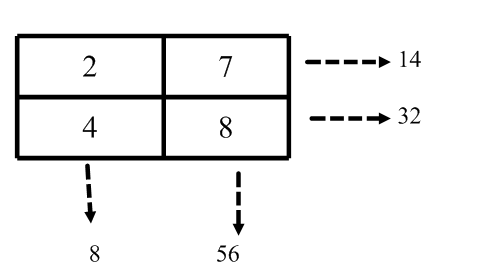
Start with a 2x2 grid, and put numbers in the spaces...

Having done this, drawe a few arrows, and do some times tables...

Followed by some adding...


Then, simply - the difference between 46 and 64 is 18.

Questions you can ask...

"Can you choose numbers that give you a difference of 4"

"What happens if you use the same numbers, in a different order"

"What happens if you add 1 to every number"

"Are there any differences you cannot make"

"what happens if you put numbers in in a pattern - 2,4,6,8, etc"

"Is there more than 1 way to make a difference of 4?"

....

It is a lot of fun (and I take no original credit for the lesson. Picked it up on my PGCE many moons ago (OK - 1995/96!)

Monday, 10 May 2010

I feel a bit let down by the technology.

I always feel a high tech solution should be better (more efficient, slicker, make me look better) than a low tech one. With that in mind when planning to collect heights of Y9 to do some serious stats with, I decided to set up a motion sensor in the top of the doorway, and measure the distance to the floor.

Then as students arrive, they stand in the doorway (no heels please), and the sensor measures the distance to the top of their heads. They type that in to a Google Form (along with Age, gender, and some other bits), and then the spreadsheet subtracts one from the other to give their height.

This should have been fool proof. Yeah, right.

Sensor in doorway. Check.

It measures 2.04 m to the ground. Check with tape measure. Check.

I stand underneath, subtract reading from 2.04m to get my height. It tells me I'm 186 cm - 6'1" (according to Wolfram|Alpha).

The problem? I'm 6'3". Double check against my known kids heights. It puts them down 2 inches (and Pippa was measured by school nurse recently). Check with the missus - it puts her short too, by an inch and a half (and she checked at the gym recently).

I can't work out how it could possibly be wrong, but it is.

So my lesson plan goes back to having a metre ruler on the wall, which upsets me more than is reasonable! At least I'm still using GoogleForms to collect the data. That's progress at least.